Termination vs Resignation in UAE: Which Is Better for Gratuity? (2026)
Reviewed under Federal Decree-Law No. 33 of 2021 | Last updated: July 2026
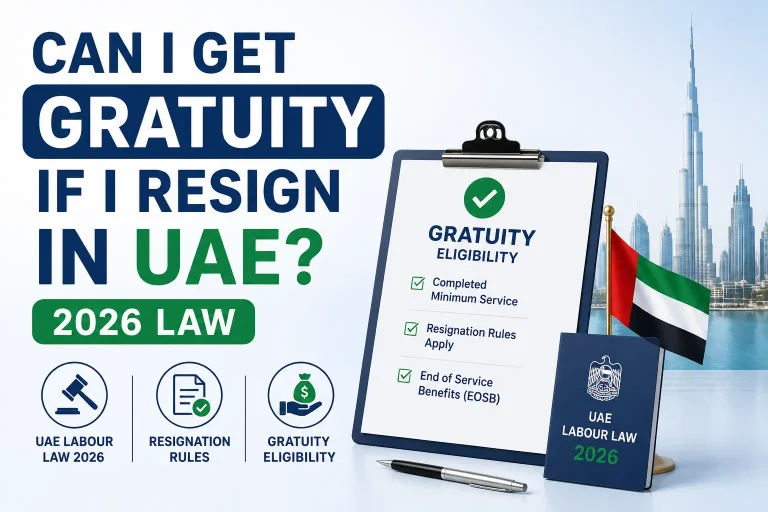
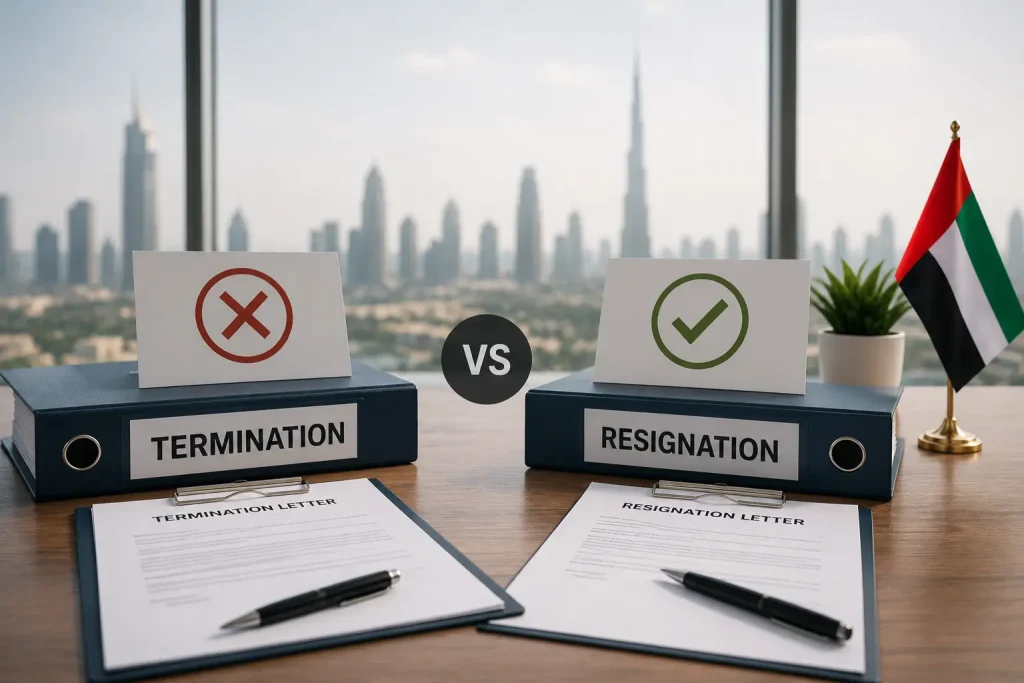
Many employees in the UAE ask the same question before leaving a job: is it better to resign or wait to be terminated? Will one option give more money than the other?
The short answer is that your gratuity amount is the same in both cases. The formula under Article 51 of Federal Decree-Law No. 33 of 2021 does not care how you left. It only looks at your basic salary and how long you worked.
But that is not the whole picture. There are situations where being terminated gives you more money than resigning. And there are situations where resigning is the smarter move. This guide explains exactly when each applies.
To calculate your gratuity based on your own salary and service dates, use our free UAE Gratuity Calculator.
Table of Contents
- The Basic Rule: Same Gratuity Formula for Both
- How the Old Law Was Different
- When Termination Pays More Than Resignation
- Arbitrary Dismissal: The Extra Compensation
- When Resignation Is the Better Choice
- Notice Pay: How It Works in Each Scenario
- The Exception: Gross Misconduct Under Article 120
- Side-by-Side Comparison Table
- Worked Example: AED 12,000 Salary, 5 Years
- Documents to Request in Each Case
- Frequently Asked Questions
The Basic Rule: Same Gratuity Formula for Both
This is the most important thing to understand before anything else.
Under Federal Decree-Law No. 33 of 2021, which came into full effect in February 2022, the gratuity formula is the same whether you resign or are terminated. There is no longer any penalty applied to gratuity because of how you left.
The formula is:
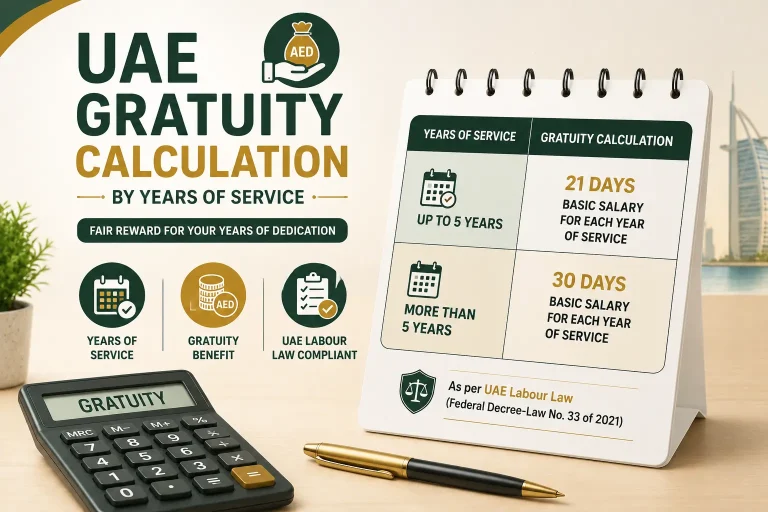
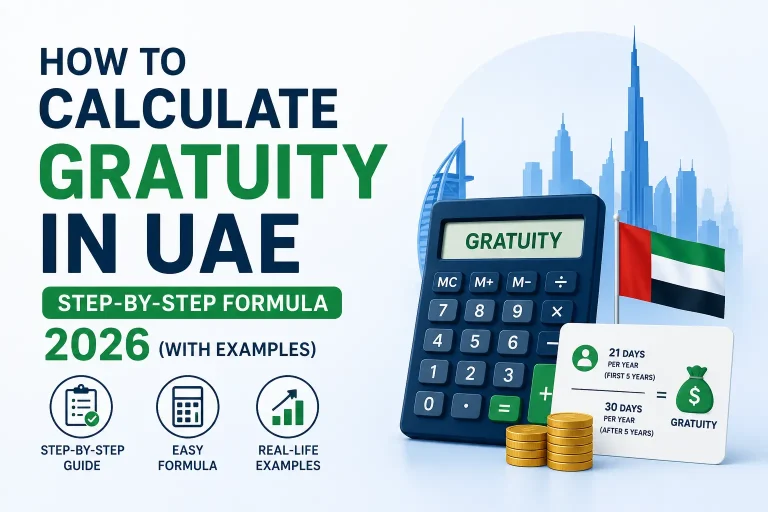
- For the first 5 years: 21 days of basic salary per year
- From year 6 onwards: 30 days of basic salary per year
- Maximum: 24 months of basic salary
- Minimum service to qualify: 1 full year
This formula is applied in exactly the same way for both resignation and termination. The only input that changes your gratuity amount is how much your basic salary is and how many years you worked. Nothing else.
How the Old Law Was Different
Before 2022, the situation was very different. Under the previous UAE Labour Law, an employee who resigned from an unlimited contract received a reduced gratuity in their first few years of service. The reductions were significant and created real financial pressure on employees who wanted to leave.
Here is how the old law treated resignation versus termination for unlimited contracts:
| Years of Service | Gratuity if Resigned (Old Law) | Gratuity if Terminated (Old Law) |
|---|---|---|
| Less than 1 year | Zero | Zero |
| 1 to 3 years | One-third of gratuity | Full gratuity |
| 3 to 5 years | Two-thirds of gratuity | Full gratuity |
| More than 5 years | Full gratuity | Full gratuity |
Under the new law, all of those reductions are gone. If you left your job before February 2022 and received a reduced gratuity because you resigned within the first 5 years, that was under the old rules. If you are leaving now or in the future, the full formula applies regardless of resignation or termination.
When Termination Pays More Than Resignation
The gratuity itself is the same in both cases. But the total payout can be higher with termination in one specific scenario: when the employer terminates you without a valid legal reason.
This is called arbitrary dismissal, and it triggers an additional payment on top of the standard settlement.
So the question to ask is not “which gives more gratuity?” because the answer is always the same. The real question is “does termination in my specific situation trigger additional compensation?” If yes, your total payout from termination will be higher than if you had resigned.
If the termination is lawful and for a valid reason, there is no additional compensation. The total payout in that case is the same as if you had resigned.
Arbitrary Dismissal: The Extra Compensation
Arbitrary dismissal happens when an employer terminates an employee without a legitimate legal reason. Under Article 47 of Federal Decree-Law No. 33 of 2021, an employee who is arbitrarily dismissed is entitled to compensation in addition to their standard gratuity.
The minimum compensation for arbitrary dismissal is 3 months of the employee’s total monthly salary. Note that this uses total salary, not just basic salary. So it includes all regular allowances.
This compensation is paid on top of:
- Standard gratuity under Article 51
- Outstanding salary for days worked
- Annual leave encashment
- Notice pay or payment in lieu of notice
A Labour Court can award more than 3 months of compensation depending on the circumstances. Factors that influence the amount include how long the employee worked, the employee’s age and financial situation, and the nature of the dismissal.
What Counts as Arbitrary Dismissal?
Termination is considered arbitrary if the employer cannot prove a valid legal reason under Article 44. Valid reasons for lawful termination include:
- Genuine redundancy or business restructuring
- The employee’s documented inability to perform the required job
- The employee’s repeated failure to follow reasonable workplace rules after written warnings
- The company ceasing operations legally
Termination is considered arbitrary if the employer:
- Gives no reason at all
- Gives a reason that cannot be proven
- Terminates because the employee complained about a workplace issue
- Terminates based on the employee’s personal characteristics unrelated to performance
- Uses “redundancy” as a cover for a personal or unjustified reason
The burden of proving the termination was lawful falls on the employer, not the employee. If the employer cannot produce clear documentation to justify the dismissal, the Labour Court is likely to find it arbitrary.
When Resignation Is the Better Choice
There are situations where resigning yourself is the smarter decision, even though it means you will not receive the arbitrary dismissal compensation.
You Have a New Job Waiting
If you have already secured another job and need to start quickly, resigning gives you control over your exit timeline. You give notice, serve it or negotiate a shorter period with your employer, and move on. Waiting to be terminated means the timing is in the employer’s hands, not yours.
Your Employment Record Matters to You
A resignation followed by a positive reference looks better on most resumes than a termination. Even if the termination was not your fault, some future employers may ask questions. If your professional reputation is a priority, a clean resignation protects it.
The Employer Is Unlikely to Terminate Arbitrarily
If your employer follows a proper process and would only terminate for a documented, valid reason, you would not receive arbitrary dismissal compensation anyway. In that case, resignation and termination lead to the same total payout. Waiting to be terminated adds no financial benefit.
You Want to Avoid Conflict
Claiming arbitrary dismissal compensation usually requires filing a complaint with MOHRE or going to the Labour Court. This takes time, energy, and can be stressful. Some employees prefer a clean departure with their full gratuity rather than a contested exit that adds extra money but also adds months of waiting.
Notice Pay: How It Works in Each Scenario
Notice pay is handled differently depending on who initiates the departure. This is separate from gratuity but it affects the total settlement amount.
| Scenario | Notice Obligation | Financial Effect |
|---|---|---|
| You resign and serve full notice | You give minimum 30 days notice | No extra payment either way |
| You resign without serving notice | You owe the employer notice pay | Employer deducts notice days from your settlement |
| Employer terminates and you work notice | Employer gives you minimum 30 days | You receive salary for all notice days |
| Employer terminates and pays in lieu of notice | Employer pays you the notice salary as lump sum | You receive full notice pay added to your settlement |
| Employer terminates with no notice and no payment | Employer is in breach of Article 43 | You can claim notice pay via MOHRE or Labour Court |
The Exception: Gross Misconduct Under Article 120
There is one scenario where termination results in zero gratuity. This is when an employer dismisses an employee for gross misconduct under Article 120 of UAE Labour Law.
Article 120 lists specific grounds for immediate dismissal without notice and without gratuity. These include:
- Physical assault on the employer, a manager, or a colleague
- Revealing the company’s confidential information or trade secrets
- Committing fraud or forgery of official documents
- Being found in an intoxicated state or under the influence of illegal substances during work
- Causing intentional damage to company property
- Committing any act that results in significant financial loss to the company
The employer must be able to prove the misconduct occurred. They cannot simply claim misconduct as a reason to avoid paying gratuity. If the employer cannot provide clear evidence, the dismissal may still be classified as arbitrary, and the employee retains their gratuity entitlement along with the right to claim additional compensation.
If you have been dismissed and told it is for gross misconduct, but you believe the claim is false, this is worth challenging through MOHRE. The burden of proof sits with the employer.
Side-by-Side Comparison Table
| Factor | Resignation | Lawful Termination | Arbitrary Dismissal |
|---|---|---|---|
| Gratuity (Article 51 formula) | Full amount | Full amount | Full amount |
| Arbitrary dismissal compensation | Not applicable | Not applicable | Min. 3 months total salary |
| Notice pay | You give notice to employer | Employer gives notice or pays in lieu | Employer pays in lieu of notice |
| Outstanding salary | Owed for days worked | Owed for days worked | Owed for days worked |
| Leave encashment | Owed for unused days | Owed for unused days | Owed for unused days |
| Control over exit timing | Employee controls it | Employer controls it | Employer controls it |
| Employment record impact | Generally cleaner | Depends on reason | May need explanation |
| Legal process needed? | No | No | Yes, if employer does not pay |
| Total payout vs resignation | Baseline | Same as resignation | Higher by at least 3 months total salary |
Worked Example: AED 12,000 Basic Salary, 5 Years
Here is a real comparison showing how the final payout differs across three scenarios for the same employee.
Employee profile:
- Basic Salary: AED 12,000 per month
- Total Monthly Package: AED 17,500 (basic plus housing and transport allowances)
- Service: 5 years exactly
- Unused Leave: 15 days
- Contract Notice Period: 30 days
Scenario A: Employee Resigns, Serves Full 30-Day Notice
| Component | Amount |
|---|---|
| Gratuity: (12,000 / 30) x 21 x 5 | AED 42,000 |
| Leave encashment: (17,500 / 30) x 15 | AED 8,750 |
| Notice pay (served fully during employment) | AED 0 |
| Total Settlement | AED 50,750 |
Scenario B: Employer Terminates with Valid Reason, Pays 30 Days in Lieu of Notice
| Component | Amount |
|---|---|
| Gratuity: (12,000 / 30) x 21 x 5 | AED 42,000 |
| Leave encashment: (17,500 / 30) x 15 | AED 8,750 |
| Payment in lieu of notice: (17,500 / 30) x 30 | AED 17,500 |
| Total Settlement | AED 68,250 |
In Scenario B the employee received AED 17,500 more than in Scenario A. This is because the employer paid notice in lieu rather than requiring the employee to work through it. The gratuity was identical in both cases.
Scenario C: Employer Terminates Without Valid Reason (Arbitrary Dismissal)
| Component | Amount |
|---|---|
| Gratuity: (12,000 / 30) x 21 x 5 | AED 42,000 |
| Leave encashment: (17,500 / 30) x 15 | AED 8,750 |
| Payment in lieu of notice: (17,500 / 30) x 30 | AED 17,500 |
| Arbitrary dismissal compensation: AED 17,500 x 3 | AED 52,500 |
| Total Settlement | AED 120,750 |
Arbitrary dismissal produced a settlement of AED 120,750 compared to AED 50,750 from resignation. The difference is AED 70,000, which comes from the payment in lieu of notice and the 3-month arbitrary dismissal compensation. The gratuity itself was AED 42,000 in all three scenarios.
Documents to Request in Each Case
Regardless of whether you resign or are terminated, you should request these documents from your employer before or on your last day.
| Document | Resignation | Termination |
|---|---|---|
| Written acceptance of your resignation (or termination letter) | Yes | Yes |
| Full settlement breakdown showing all calculations | Yes | Yes |
| Experience certificate (work reference letter) | Yes | Yes |
| Written reason for termination | Not needed | Very important |
| Leave balance statement | Yes | Yes |
| Cancellation of work visa / NOC letter | Yes | Yes |
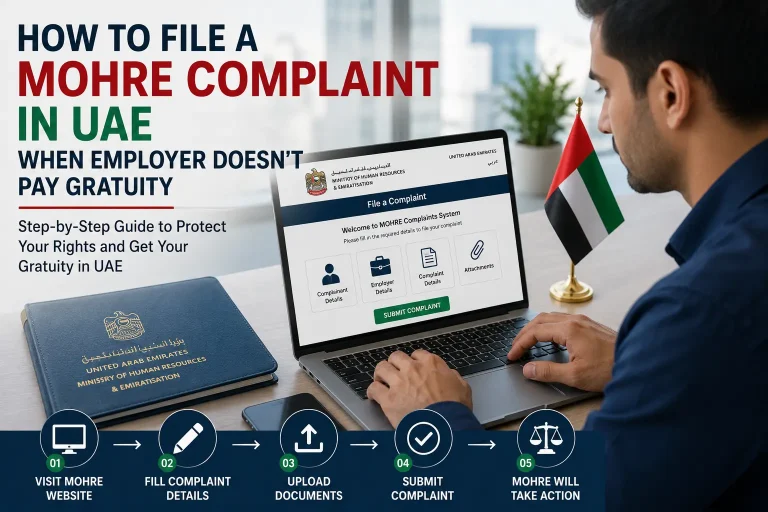
If you are terminated and the employer gives no written reason, ask for it in writing. If the termination was arbitrary, that written reason is evidence you will need if you decide to file a complaint with MOHRE.
Frequently Asked Questions
Is gratuity the same for resignation and termination in UAE?
Yes. Under Federal Decree-Law No. 33 of 2021, the Article 51 gratuity formula is exactly the same for both resignation and termination. Both calculate 21 days of basic salary per year for the first 5 years and 30 days per year from year 6 onwards. The 2021 law removed all previous gratuity reductions that applied to resignation. The only exception is dismissal for gross misconduct under Article 120, where gratuity is forfeited entirely.
Is it better to resign or be terminated in UAE?
For gratuity alone, there is no difference. But if the employer terminates you without a valid legal reason, this is arbitrary dismissal and entitles you to extra compensation of at least 3 months of your total salary, on top of your standard settlement. If the termination is lawful, the total payout is the same as resignation. If you have a new job lined up and want to control your timeline, resignation is usually the better practical choice. If you believe you may be arbitrarily dismissed, staying until the employer terminates can result in a significantly higher payout.
What extra compensation do I get if terminated without reason in UAE?
Under Article 47, arbitrary dismissal entitles you to a minimum of 3 months of your total monthly salary as compensation. This is paid in addition to your gratuity, notice pay, outstanding salary, and leave encashment. A Labour Court may award more than 3 months depending on your length of service, age, and the nature of the dismissal. The employer must pay this within the standard 14-day settlement deadline or face further penalties.
Can I lose gratuity if I resign in UAE?
No. Under the current law, resigning does not reduce or cancel your gratuity entitlement. You receive the full Article 51 amount as long as you have completed at least one full year of service. The only financial risk of resignation is if you do not serve your notice period. In that case, your employer can deduct the salary equivalent of the unserved notice days from your settlement. But the gratuity itself remains fully owed and cannot be touched as a penalty for not serving notice.
Does termination for redundancy affect gratuity in UAE?
No. Genuine redundancy is a lawful termination under UAE labour law. The employee receives full gratuity under Article 51, plus notice pay and all other final settlement components. There is no additional arbitrary dismissal compensation for genuine redundancy. However, if redundancy is used as an excuse for a different reason, the employee can challenge the termination at MOHRE and argue that it was arbitrary, which may result in the additional compensation under Article 47.
Key Points at a Glance
- Gratuity formula is identical for resignation and termination under the 2021 law
- The old penalties that reduced gratuity for resignation no longer exist
- Arbitrary dismissal adds at least 3 months of total salary on top of standard gratuity
- Lawful termination produces the same total as resignation (difference is only notice pay)
- Resignation gives you control over timing and generally a cleaner employment record
- Gross misconduct dismissal under Article 120 results in zero gratuity
- Always get the termination reason in writing before leaving
- If you believe dismissal was arbitrary, file a complaint with MOHRE before leaving UAE
Use our free UAE Gratuity Calculator to calculate your gratuity for any scenario. Enter your basic salary and service years to get your exact Article 51 amount instantly.
For the full list of what is included in your settlement beyond gratuity, read our guide on full and final settlement in UAE.
Disclaimer: This article is for informational purposes and reflects Federal Decree-Law No. 33 of 2021 as in force in July 2026. It does not constitute legal advice. For disputes involving arbitrary dismissal or complex termination situations, speak with a qualified UAE employment lawyer or contact MOHRE at mohre.gov.ae.